 Variety Partners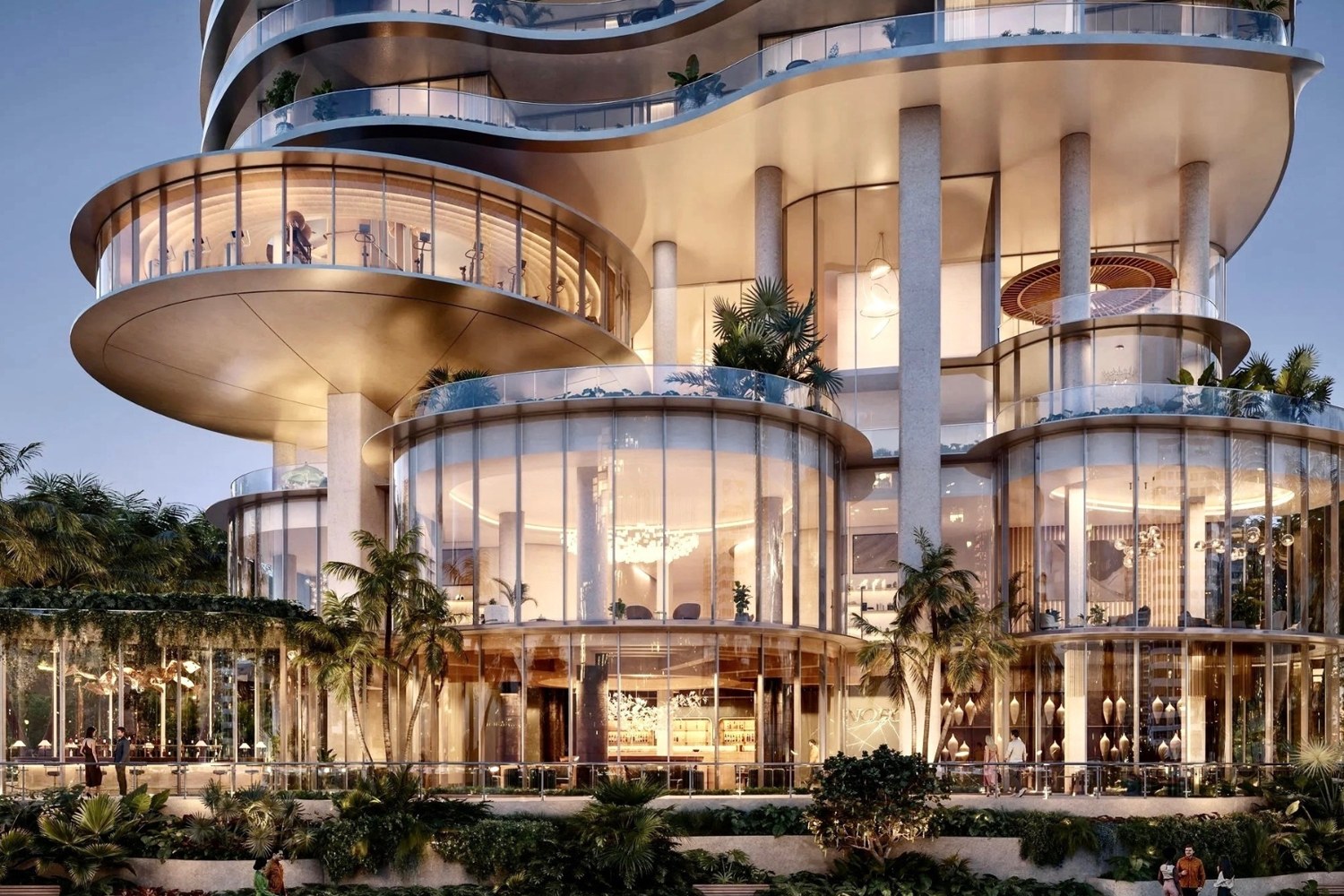
There is a building on Brickell that has already made history without existing. Before a single floor was poured, before the city had even finished reviewing the plans, 619 Brickell by Nobu had collected more than one billion dollars in reservations. Not sales. Reservations. Thousands of people lining up to put money down on apartments inside a seventy-five-story tower that, as of this week, is still a rendering and a promise.
On July 15, the project went in front of Miami's Urban Development Review Board, the panel that studies how a proposed building meets the street, the skyline, and the code. It was later recommended for approval. That is the normal order of things for a skyscraper. You show the drawings, the city weighs in, and then, much later, you find out whether anybody actually wants what you are selling. 619 Brickell ran that order backwards. The demand showed up first, and it showed up in ten figures.
Miami has quietly crossed a line here, and it is worth naming plainly. The city is no longer only selling buildings. It is selling names, expectations, and access, and it is collecting the money for them long before the concrete arrives.
A billion dollars in faith
Start with the number, because the number is the whole story. A billion dollars in reservations for a building that does not yet exist is not a real estate statistic. It is a measure of belief, denominated in cash.
Every one of those deposits is a bet placed on a description. The buyers have not walked the units. They have not felt the light at four in the afternoon or heard how quiet a bedroom stays with the windows shut. They read a name, studied a rendering, ran the math on a floor plan, and decided that was enough to commit real money.
That is the part that should stop you. In almost every other purchase of this size, people demand to see the thing first. You tour the house. You test drive the car. You try on the suit. Here, thousands of people committed life-changing sums to an idea, and they did it early, because the idea came wrapped in names they already trusted. The building is theoretical. The trust is not.
The names doing the heavy lifting
So look at what those names are, because they are the actual product on sale. The tower is just where they happen to be printed.
The first is Nobu. Not a builder, a hospitality brand that spent three decades teaching a global audience exactly what to expect the moment they see the word. A certain room, a certain level of service, a certain crowd. When Nobu attaches its name to a residence, it is not lending a logo. It is lending thirty years of consistency, and buyers price that consistency in without being asked to.
The second is Foster + Partners, the architecture firm whose work reads as serious money and serious taste before you know a single dimension of the plan. Attaching that name is a way of telling a buyer the building will still look intentional in fifteen years, and will not embarrass the person who bought into it.
Then comes the setting, Brickell waterfront, which Miami has spent two decades turning into a brand of its own. And around all of it sit the promises the modern luxury buyer now treats as the price of entry: wellness built into the walls, hospitality available on tap, a lifestyle rather than a floor plan. Stack those together and the billion stops being mysterious. Nobody paid for square footage. They paid for the combined reputation of everyone whose name is on the door.
You are not buying a building. You are buying a promise.
This is the mechanism worth studying, because it is not unique to towers. It is how every strong brand actually works. It is just rarely this visible, or this expensive.
A promise, once it is trusted, collapses the distance between wanting something and paying for it. Normally a buyer needs proof, and proof takes time. The building has to exist. The product has to ship. The service has to be felt at least once. Trust is the thing that lets a person skip the proof and act on the description alone.
So a billion dollars in early reservations is really a measurement of how much proof these names let their buyers skip. A no-name developer with the identical waterfront lot and the identical blueprints could not have collected a fraction of it, because they would have had nothing to borrow against. Same dirt, same drawings, different names, wildly different demand. The gap between those two outcomes is the exact dollar value of brand equity, and this week Brickell printed the receipt.
Why we filed this under Branding, not Miami
It would be easy to read 619 Brickell as another Miami real estate story, one more tower on a skyline that collects them like charms on a bracelet. Brickell is the setting. It is not the point.
The point is what the project proves about how demand gets built now. A trusted name turned an unbuilt concept into measurable, bankable demand, a billion dollars of it, before the thing itself was real. That is a branding story that happens to be wearing a hard hat. The address is incidental. The lesson is not.
And the lesson travels down to businesses that will never pour a foundation. The distance between you and your customer is made of proof. The more a person has to see before they buy, the slower and more expensive every single sale becomes. A brand's real job is to shrink that distance, to earn enough trust that people are willing to act on your promise instead of waiting on your evidence.
The part that was never on the rendering
Notice what the buyers were never actually shown. No rendering can promise how a doorman remembers your name, how quickly a maintenance request gets answered, or how the lobby feels at eleven on a Tuesday night. Those are the things that define living somewhere, and not one of them can be drawn. Yet they are exactly what the Nobu name is quietly guaranteeing, because a hospitality brand's entire business is the part of an experience that does not photograph.
That is why the reservations landed. The buyers were not trusting the picture. They were trusting the invisible service standard behind the picture, the one Nobu has spent thirty years making predictable in every city it operates. A rendering sells the view. The name sells everything the rendering leaves out, and the second thing is worth far more than the first.
This is the quiet reason branded residences keep multiplying across Brickell. A developer can build walls. Only a brand can credibly promise what happens inside them once the keys change hands, and buyers have learned to pay a steep premium for that promise, precisely because it is the part most likely to fall apart without a name standing behind it.
What it means if you are not building a tower
Most businesses reading this are not selling seventy-five stories of waterfront. They are selling meals, garments, records, services, hours. The mechanism is identical, and scale is the only difference.
Every time a customer chooses you before they have proof, tries the new dish because your last one was good, books the service on your name alone, pre-orders the drop from a single photo, that is a small 619 Brickell. That is brand equity doing quietly, at the level of one transaction, exactly what it just did loudly on Brickell Avenue.
You build that equity the slow way, the same way Nobu and Foster + Partners did. You keep the promise every single time, in public, until the name itself becomes the proof. Most businesses want the billion-dollar result without the decades of kept promises that make it possible, and there is no version of the story where that shortcut exists.
619 Brickell will take years to build. The trust that pre-sold it took far longer than that. That is the real order of operations, and it is the one worth copying. The tower is the easy part. The name that made a billion dollars show up before the building did is the thing that was actually under construction all along.