 Variety Partners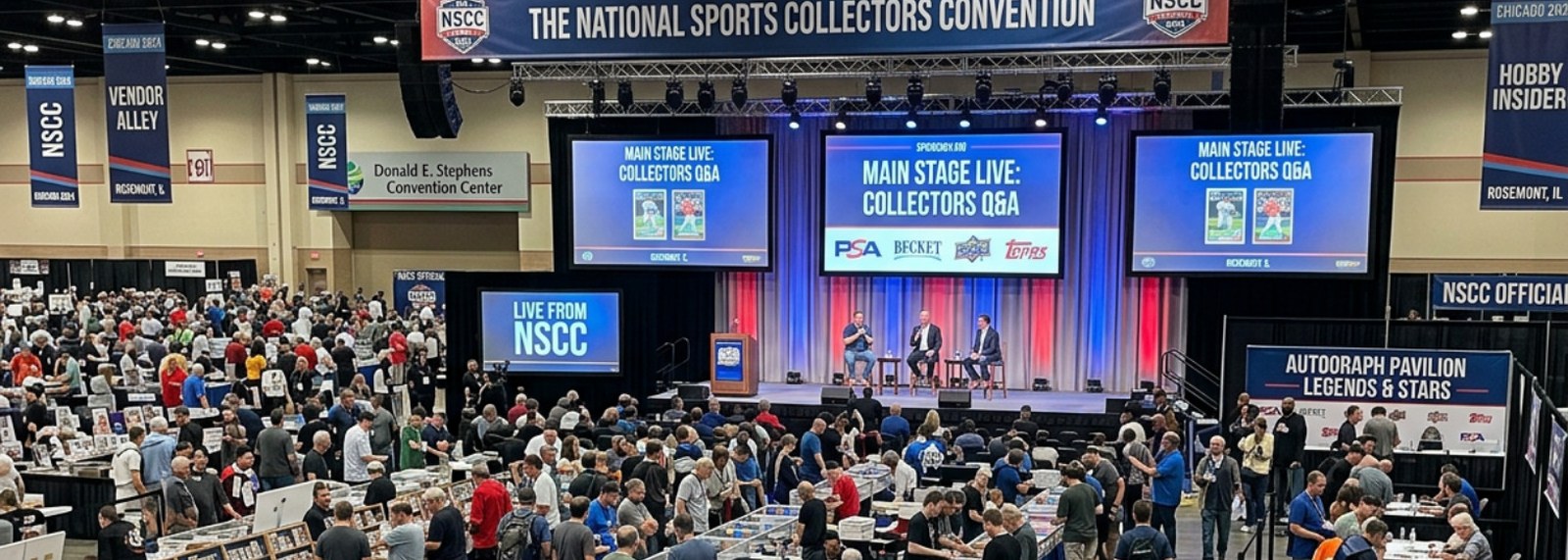
When Fanatics threw its first festival, it was a good idea with something to prove. A company that had spent years selling jerseys and trading cards decided to build a convention around the one thing it understood better than anyone, which is fans. That opening edition looked like exactly what it was, a promising experiment. The third, which wrapped this week, looked like something else entirely.
It ran four days, July 16 through 19, and it was not a convention anymore. It was a marketplace, a stage, an arena, and a film set at the same time. Access, celebrity, competition, collectibles, and spectacle, all sold in one building to a crowd that came to be part of it rather than watch it. The fans did not come to see the main event. The fans were the main event, and Fanatics figured out how to charge for that.
From convention to marketplace
A convention is a place you go to look at things. A marketplace is a place where things happen to you, and where you leave having spent money you did not plan to spend because the room made spending feel like participation. Fanatics Fest crossed that line deliberately.
The genius is not that they added more booths. It is that they collapsed a dozen separate businesses into a single floor. In one weekend a fan could buy merchandise, hunt collectibles, meet athletes, watch competitions, film content for their own channels, walk past sponsors, and stand ten feet from a moment that would be everywhere online by dinner. Each of those used to be its own event, its own transaction, its own trip. Fanatics stacked them, and the stack is the product.
And a marketplace, unlike a convention, gives people a reason to return every year. A convention you attend once, see what there is to see, and cross off the list. A marketplace changes its inventory, its guests, and its surprises, so the only way to know what you missed is to be in the room the next time. Fanatics did not just build a bigger event. It built a recurring one, which is a far more valuable thing to own.
The number that changes the math
Last year's edition reportedly drew more than 125,000 people. That number is worth sitting with, because it reframes everything else.
A hundred and twenty-five thousand people in a building are not an audience in the usual sense. They are inventory. Every one of them is a potential buyer, a potential camera, a potential clip, a potential line in a sponsor's report. When you gather attention at that density and put it in a room with things to buy and moments to film, you have not built an event. You have built a machine that turns presence into revenue several different ways at once.
Most brands measure attention in views, which are cheap, passive, and forgotten in seconds. Fanatics measures it in bodies through a door, which are expensive, active, and impossible to fake. The second kind is worth vastly more, and the gap between them is the entire thesis of the weekend.
What Fanatics is actually selling
Strip away the athletes and the lights and the thing Fanatics sells is access, priced by how close you want to get. Access to players. Access to product before anyone else. Access to a room where the people you follow online are suddenly standing in front of you. Proximity is the commodity, and proximity only exists in person.
This is why the whole model depends on the physical floor. You cannot livestream the feeling of being in the room. You can broadcast the concert, but you cannot broadcast having been there. The moment attention has an address and a date, it stops being something people scroll past and becomes something they buy a ticket to enter, travel for, and post about for a week afterward. Scarcity does the rest. There are only so many wristbands, only so many hours, only so many feet from the stage.
Access also has a natural ladder, and Fanatics built every rung. General admission to be in the room. Premium tiers to skip the line. VIP to get the photo, the signature, the single minute of a player's time that becomes a story you tell for years. The same event sells the same weekend at five different prices, because proximity is infinitely divisible and people will always pay to close the last few feet.
The World Cup weekend was not a coincidence
Fanatics did not schedule this year's festival against the World Cup final weekend by accident. It scheduled it there because attention was already pooling in one place, and the smartest move in the attention economy is to build your event where the crowd is already looking.
Timing like that is a strategy, not a calendar quirk. Attention is hardest to create from scratch and easiest to borrow, and the biggest sporting event on earth was already doing the creating. Fanatics simply built a door next to the crowd and invited it inside.
Then it added names to make sure the crowd stayed. This year's floor connected the tournament's gravity to a lineup that read like a cross-section of American fame: Tom Brady, JAY-Z, Travis Scott, Kevin Hart, David Beckham, Serena Williams, and a long list of other figures from sports and entertainment. That mix is the tell. Fanatics is no longer a sports company throwing a sports party. It is an attention company that happens to have started in sports, and it now books culture the way a festival books headliners.
Everything under one roof
Look at what shared the same floor and the strategy becomes obvious. Celebrity access. Merchandise. Collectibles and trading cards. Live competitions. Content creation, both from fans and for the brand. Sponsorships woven into every corner. And, threaded through all of it, the live viral moment, the thing that happens once, in person, and then travels everywhere for free because a hundred thousand phones were there to carry it.
That last piece is the quiet engine. Fanatics does not have to buy the reach afterward. The room manufactures it. Every attendee is a distributor, every surprise is content, and every clip that leaves the building is an advertisement for next year that the company did not pay to produce. The event pays for itself twice, once at the door and once online.
Why the ticket beats the stream
It is worth being precise about why in-person attention is the expensive kind, because the reason is not sentiment. It is math. A stream can be paused, muted, skipped, or half-watched while someone does three other things. A ticket cannot. When a person is physically inside the building, their attention is undivided in a way no screen can force, and undivided attention is the scarcest resource any brand can buy.
That density is why sponsors pay differently for a floor than for a feed. On a feed, a brand rents a fraction of a distracted glance. On the floor at Fanatics Fest, it stands in front of a hundred thousand people who chose to be there, paid to be there, and arrived primed to spend. The same logo is worth an order of magnitude more in the second setting, and every sponsor in the building knows it.
Then there is the afterlife of the moment. A viral clip filmed inside the event carries the room's energy with it, the noise, the crowd, the sense that something real just happened. A clip filmed in a studio never does. The building does not only gather attention on the day. It manufactures the raw material that keeps generating attention for weeks, and it does that for free.
The lesson for anyone with an audience
You do not need a hundred and twenty-five thousand people or a Hall of Fame guest list to use what Fanatics proved. The principle scales all the way down.
If your audience only ever meets you through a screen, you are leaving the most valuable version of their attention on the table. The dinner that turns diners into regulars. The launch party that turns followers into buyers. The pop-up, the listening session, the workshop, the single night where the people who like you online stand in a room with you and each other. Those are small Fanatics Fests, and they build the kind of loyalty that a feed never will, because presence is the one thing the algorithm cannot copy.
The takeaway is one line, and it is worth keeping. Attention is worth the most at the exact moment your audience can physically enter it. Fanatics built a four-day building around that sentence. The rest of us can start with one good night.