The Position · Culture
Special Edition · July 20, 2026 · 5 min read

Spain Stands Alone: A New World Champion Is Crowned

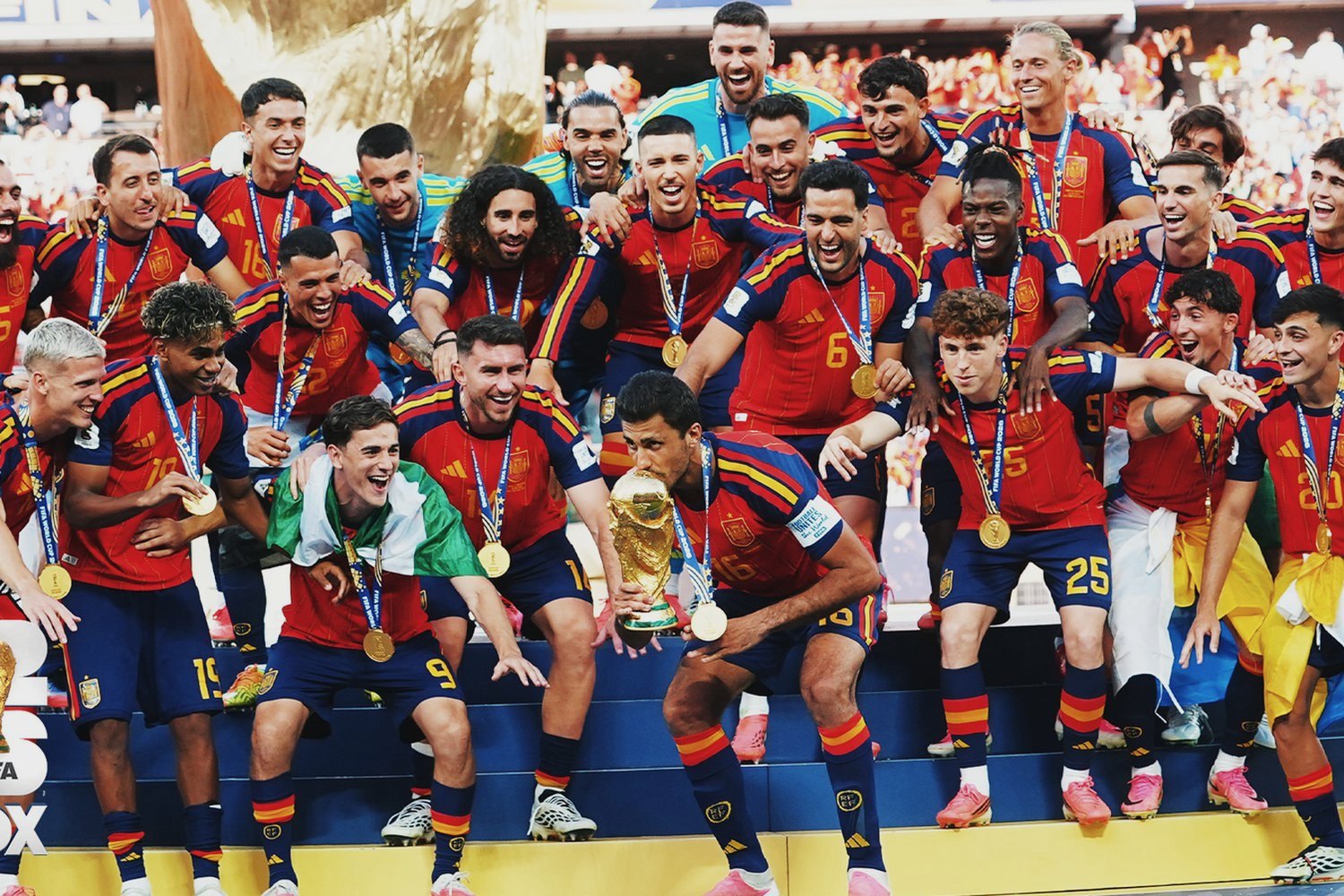
Spain beat Argentina 1–0 in extra time to win a second World Cup, ended Messi's last tournament without a title, and became the first nation ever to hold both World Cups at once.

Spain Stands Alone: A New World Champion Is Crowned

Ferran Torres was standing in the box when the ball came down. Nico Williams had lifted it there, into the one patch of grass Argentina had left unguarded, and Torres met it before anyone in white and sky blue could react. The clock had already pushed past ninety. The score had been nothing to nothing for the whole of regulation, a scoreless deadlock that felt like it might swallow the night whole. Then it was one to nothing. And it stayed there. And Spain were champions of the world.

The final was played on Sunday, July 19, 2026, at MetLife Stadium in East Rutherford, New Jersey, a short drive from Manhattan and a long way from the last time this tournament sat on United States soil. Eighty thousand six hundred and sixty-three people filled the seats. A great many of them, you suspect, had come to watch one man in blue and white write a final chapter. They watched a different story get written instead.

Spain beat Argentina 1–0 in extra time. It is the second World Cup title in the country's history, arriving sixteen years after the first, in 2010. But the number that matters most is smaller and stranger than a two.

The goal came when the game had nowhere left to go

For ninety minutes the final was a wrestling match dressed as a soccer game. Two teams that knew each other's habits circled and pressed and gave nothing away. Rodri sat in front of the Spanish defense and quietly turned Argentina's attacks into dead ends. Lamine Yamal, the teenager who has spent this tournament looking older than the men marking him, kept finding the ball in tight corners and refusing to lose it. Nothing dropped. The half ended level. The ninety ended level. The game went where nobody wanted it to go, into the extra thirty.

That is where finals reveal who has legs left and who is running on memory. Nico Williams still had legs. He carried the ball wide, looked up, and floated it toward the six-yard box, and Ferran Torres arrived on cue. One touch, one finish, and the stadium split into two different sounds at once. It was the only goal of the match. In a tournament defined by how little Spain gave away, it was fitting that the whole thing turned on a single moment they took.

One goal in a whole tournament

Here is the fact that will outlive the highlight reel. Spain conceded exactly one goal across the entire World Cup. Not one goal in the final, one goal in the tournament. No champion in the history of this competition has ever finished a World Cup having given up so little. Seven matches, a month of the best attackers alive taking their turns, and the Spanish net moved once.

That is not luck. Luck does not repeat itself for four weeks. It is a way of playing, patient and merciless, built on a midfield that strangles the game before it reaches the goalkeeper. Rodri was the metronome. The back line held its shape when holding shape was the hardest thing to do. On the road to the final Spain beat four teams ranked inside the world's top ten, and none of them found a way to make the scoreboard tell a different story.

The streak that would not break

The title stretched an unbeaten run to thirty-eight matches. That streak did not begin at this World Cup. It already carried the weight of Euro 2024, the European Championship Spain won two summers ago, and it has now rolled forward without a loss for so long that it has stopped feeling like form and started feeling like an era. Teams do not go thirty-eight matches unbeaten by accident. They do it by being right about how the game should be played and refusing to be talked out of it.

There is a temptation, watching a side this controlled, to call it boring. Do not. Control at this level is a kind of violence done quietly. Spain did not batter opponents. They removed their options one by one until there was nothing left to do but lose. By the final, the whole world had watched them do it enough times to know it was coming, and Argentina still could not stop it.

Messi wept, and the number was second

Days ago this publication wrote that Lionel Messi had one match left. He did. It was this one, and it ended the way the cruelest sports stories end, close enough to touch and still out of reach. He is 39 years old. This was, in all likelihood, the last World Cup he will ever play. He finished it with 8 goals and 4 assists, numbers that would headline almost any other player's tournament, and here they placed him second in the race for the Golden Boot.

At the trophy ceremony he wept. There is no gentler way to write it and no reason to try. Argentina were the defending champions, winners in 2022, and they came to the United States chasing back-to-back titles. No nation has managed that since Brazil won in 1958 and again in 1962, more than sixty years ago. Argentina came within one extra-time goal of joining that short list. Instead they go home denied, and their greatest player leaves the World Cup stage for the last time with a runner-up's medal and a face that every camera found.

You can build a whole career hoping for the ending Messi already had, in Qatar four years ago. What Sunday proved is that the game owes no one a second one.

The record went to a Frenchman

The Golden Boot did not go to Spain, and it did not go to Argentina. It went to Kylian Mbappé of France, who scored 10 goals across the tournament and, in doing so, became the all-time leading scorer in World Cup history with 22 career goals. He passed every name that ever held the mark. He is still in his twenties. The number he set will sit there for years, daring the next generation to come and take it, and the arithmetic says most of them will run out of tournaments before they run out of chances.

That is the quiet subplot of this World Cup. The individual honors and the team honor went to different countries entirely. Spain won the thing that gets engraved. Everyone else won the consolations, and consolations, however gaudy, are still the thing you are left holding when someone else lifts the cup.

Two trophies in one country's hands

Now consider what Spain actually holds tonight. Their men are world champions. Their women are also world champions, ranked number one on the planet and reigning holders of the Women's World Cup. No nation in the history of the sport has ever held both titles at the same moment. Spain is the first. Both cups, one country, one flag over the whole game at once.

It is easy to let that fact slide past as trivia. It is not trivia. It is the clearest possible statement that this is not one golden generation getting lucky but a footballing culture producing champions across its whole width. The names on the men's roster will change. Yamal is a teenager. Williams and Torres and Rodri have years in front of them. The machine that made them is still running, and it is now the only machine on earth turning out world champions of both kinds.

What Spain leaves behind

The 2026 World Cup came to the United States promising spectacle, and it delivered a final that was almost stubborn in its refusal to be spectacular, right up until the instant it wasn't. Ninety minutes of nothing, then one header met by one striker, then everything. That is the shape of the thing that gets remembered. Not the flurry. The single moment that decides.

Spain will be remembered for the one goal they let in and the one goal they needed to win. For a streak that reached thirty-eight and showed no sign of caring. For being the team that stood in the way of Messi's last miracle and did not blink. Championships are usually won by the side that wants it more. This one was won by the side that gave away less, over and over, until only they were left standing.

Argentina will remember East Rutherford as the night the ball would not fall for them. Spain will remember it as the night they became the first nation to hold the whole sport in both hands. And somewhere in the seats at MetLife, eighty thousand people watched a great man cry and a great team refuse to let him have the ending everyone had come to see. The World Cup does not deal in fairness. It deals in champions. On Sunday, the champion wore red.

The Position · Culture

Spain Stands Alone: A New World Champion Is Crowned

Spain beat Argentina 1–0 in extra time to win a second World Cup, ended Messi's last tournament without a title, and became the first nation ever to hold both World Cups at once.

Spain Stands Alone: A New World Champion Is Crowned

Ferran Torres was standing in the box when the ball came down. Nico Williams had lifted it there, into the one patch of grass Argentina had left unguarded, and Torres met it before anyone in white and sky blue could react. The clock had already pushed past ninety. The score had been nothing to nothing for the whole of regulation, a scoreless deadlock that felt like it might swallow the night whole. Then it was one to nothing. And it stayed there. And Spain were champions of the world.

The final was played on Sunday, July 19, 2026, at MetLife Stadium in East Rutherford, New Jersey, a short drive from Manhattan and a long way from the last time this tournament sat on United States soil. Eighty thousand six hundred and sixty-three people filled the seats. A great many of them, you suspect, had come to watch one man in blue and white write a final chapter. They watched a different story get written instead.

Spain beat Argentina 1–0 in extra time. It is the second World Cup title in the country's history, arriving sixteen years after the first, in 2010. But the number that matters most is smaller and stranger than a two.

The goal came when the game had nowhere left to go

For ninety minutes the final was a wrestling match dressed as a soccer game. Two teams that knew each other's habits circled and pressed and gave nothing away. Rodri sat in front of the Spanish defense and quietly turned Argentina's attacks into dead ends. Lamine Yamal, the teenager who has spent this tournament looking older than the men marking him, kept finding the ball in tight corners and refusing to lose it. Nothing dropped. The half ended level. The ninety ended level. The game went where nobody wanted it to go, into the extra thirty.

That is where finals reveal who has legs left and who is running on memory. Nico Williams still had legs. He carried the ball wide, looked up, and floated it toward the six-yard box, and Ferran Torres arrived on cue. One touch, one finish, and the stadium split into two different sounds at once. It was the only goal of the match. In a tournament defined by how little Spain gave away, it was fitting that the whole thing turned on a single moment they took.

One goal in a whole tournament

Here is the fact that will outlive the highlight reel. Spain conceded exactly one goal across the entire World Cup. Not one goal in the final, one goal in the tournament. No champion in the history of this competition has ever finished a World Cup having given up so little. Seven matches, a month of the best attackers alive taking their turns, and the Spanish net moved once.

That is not luck. Luck does not repeat itself for four weeks. It is a way of playing, patient and merciless, built on a midfield that strangles the game before it reaches the goalkeeper. Rodri was the metronome. The back line held its shape when holding shape was the hardest thing to do. On the road to the final Spain beat four teams ranked inside the world's top ten, and none of them found a way to make the scoreboard tell a different story.

The streak that would not break

The title stretched an unbeaten run to thirty-eight matches. That streak did not begin at this World Cup. It already carried the weight of Euro 2024, the European Championship Spain won two summers ago, and it has now rolled forward without a loss for so long that it has stopped feeling like form and started feeling like an era. Teams do not go thirty-eight matches unbeaten by accident. They do it by being right about how the game should be played and refusing to be talked out of it.

There is a temptation, watching a side this controlled, to call it boring. Do not. Control at this level is a kind of violence done quietly. Spain did not batter opponents. They removed their options one by one until there was nothing left to do but lose. By the final, the whole world had watched them do it enough times to know it was coming, and Argentina still could not stop it.

Messi wept, and the number was second

Days ago this publication wrote that Lionel Messi had one match left. He did. It was this one, and it ended the way the cruelest sports stories end, close enough to touch and still out of reach. He is 39 years old. This was, in all likelihood, the last World Cup he will ever play. He finished it with 8 goals and 4 assists, numbers that would headline almost any other player's tournament, and here they placed him second in the race for the Golden Boot.

At the trophy ceremony he wept. There is no gentler way to write it and no reason to try. Argentina were the defending champions, winners in 2022, and they came to the United States chasing back-to-back titles. No nation has managed that since Brazil won in 1958 and again in 1962, more than sixty years ago. Argentina came within one extra-time goal of joining that short list. Instead they go home denied, and their greatest player leaves the World Cup stage for the last time with a runner-up's medal and a face that every camera found.

You can build a whole career hoping for the ending Messi already had, in Qatar four years ago. What Sunday proved is that the game owes no one a second one.

The record went to a Frenchman

The Golden Boot did not go to Spain, and it did not go to Argentina. It went to Kylian Mbappé of France, who scored 10 goals across the tournament and, in doing so, became the all-time leading scorer in World Cup history with 22 career goals. He passed every name that ever held the mark. He is still in his twenties. The number he set will sit there for years, daring the next generation to come and take it, and the arithmetic says most of them will run out of tournaments before they run out of chances.

That is the quiet subplot of this World Cup. The individual honors and the team honor went to different countries entirely. Spain won the thing that gets engraved. Everyone else won the consolations, and consolations, however gaudy, are still the thing you are left holding when someone else lifts the cup.

Two trophies in one country's hands

Now consider what Spain actually holds tonight. Their men are world champions. Their women are also world champions, ranked number one on the planet and reigning holders of the Women's World Cup. No nation in the history of the sport has ever held both titles at the same moment. Spain is the first. Both cups, one country, one flag over the whole game at once.

It is easy to let that fact slide past as trivia. It is not trivia. It is the clearest possible statement that this is not one golden generation getting lucky but a footballing culture producing champions across its whole width. The names on the men's roster will change. Yamal is a teenager. Williams and Torres and Rodri have years in front of them. The machine that made them is still running, and it is now the only machine on earth turning out world champions of both kinds.

What Spain leaves behind

The 2026 World Cup came to the United States promising spectacle, and it delivered a final that was almost stubborn in its refusal to be spectacular, right up until the instant it wasn't. Ninety minutes of nothing, then one header met by one striker, then everything. That is the shape of the thing that gets remembered. Not the flurry. The single moment that decides.

Spain will be remembered for the one goal they let in and the one goal they needed to win. For a streak that reached thirty-eight and showed no sign of caring. For being the team that stood in the way of Messi's last miracle and did not blink. Championships are usually won by the side that wants it more. This one was won by the side that gave away less, over and over, until only they were left standing.

Argentina will remember East Rutherford as the night the ball would not fall for them. Spain will remember it as the night they became the first nation to hold the whole sport in both hands. And somewhere in the seats at MetLife, eighty thousand people watched a great man cry and a great team refuse to let him have the ending everyone had come to see. The World Cup does not deal in fairness. It deals in champions. On Sunday, the champion wore red.

← All stories