The Position · Attention
June 23, 2026 · 5 min read

On $ Miami Ave, Content Creators Are Becoming Brickell's New Billboards

How phones, streamers, clip farming, AI tools, and real street moments are changing the way attention gets made.

On $ Miami Ave, Content Creators Are Becoming Brickell's New Billboards

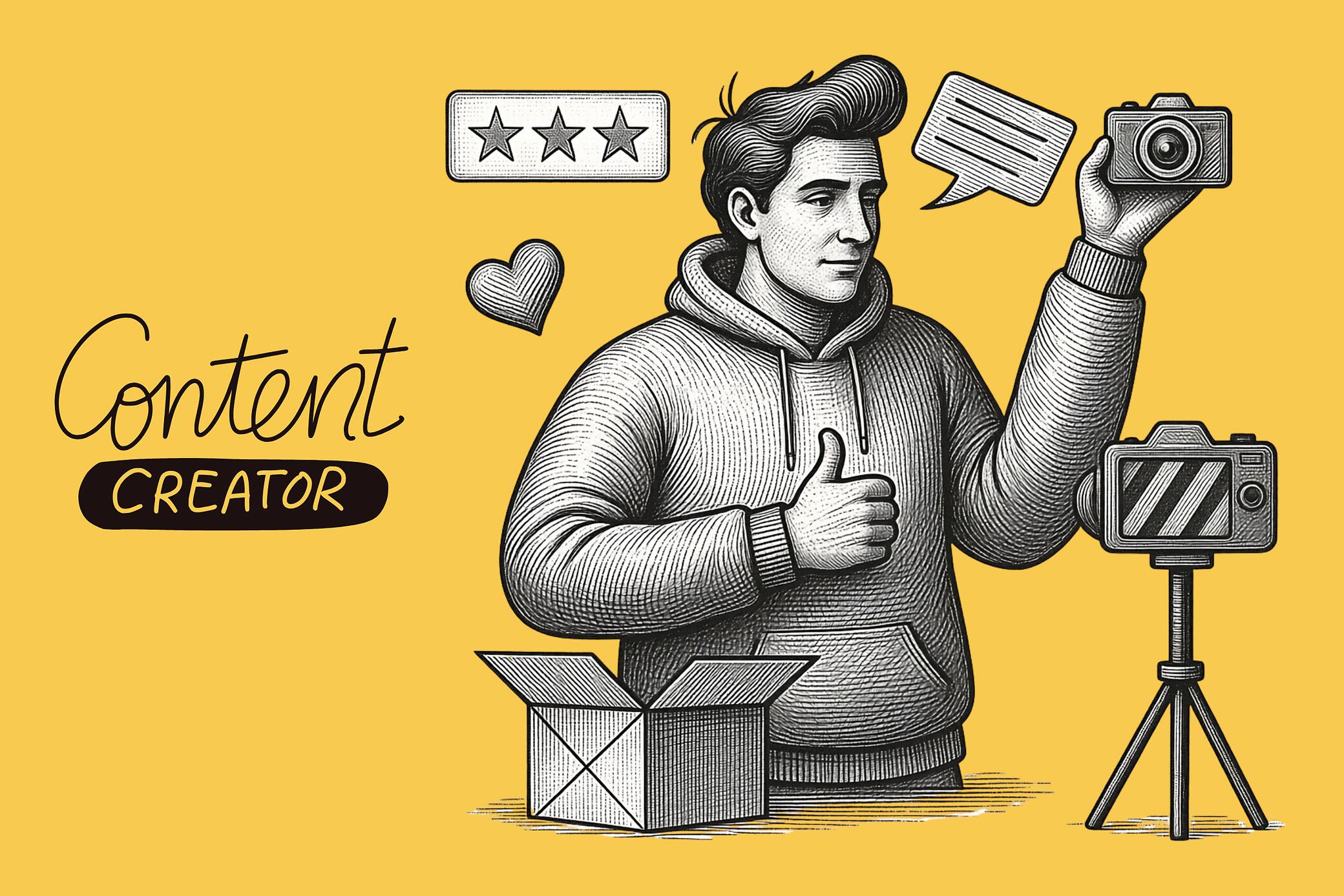
The new billboard in Brickell is not always on the side of a building. Sometimes it is someone walking down South Miami Avenue with a phone out.

A few blocks from Brickell City Centre, near Sexy Fish, content does not feel like something planned in a studio. It feels like something happening outside. Cars pull up, people walk by, restaurants fill, and cameras come out. Someone is livestreaming, someone is filming a TikTok, someone is trying to catch a reaction, an outfit, a face, any moment that can become a clip. Brickell is starting to feel like a live content map, not in the polished marketing way but in the real one.

The street has movement, nightlife, business traffic, luxury towers, tourists, locals, and creators who know that being seen in the right place can become part of the story. South Miami Avenue is not just a location, it is a setting, and in the creator economy setting is everything. For a long time businesses treated attention as something they bought, running ads and waiting for the algorithm to push the message out. That still has a place, but a paid ad gets ignored in half a second, while a real clip can stop someone because it feels like something is actually happening. So creators are becoming Brickell's new billboards. They are not just posting; they are moving through the city, generating proof that a place has energy, and the audience is watching the environment as much as the business.

The Street Is the New Feed

South Miami Avenue works because it already holds what content needs: movement, status, nightlife, recognizable restaurants, cars, entrances, valet moments, people walking through with somewhere to be. A creator does not have to invent the scene. The street hands them one.

So creators are going outside. TikTok creators are not just dancing in rooms anymore, YouTubers are not only sitting in front of cameras, and Twitch streamers are walking real neighborhoods with live audiences watching every interaction. Prank channels, interview channels, nightlife pages, food and fashion pages, IRL streamers, local lifestyle accounts: all of them are turning public places into content sets. Brickell fits because it already looks like content, with the city backdrop, the money energy, the restaurants, and the kind of traffic that makes a video feel active before anything happens. A business can spend money trying to look relevant online, but if the street around it has real energy, a creator makes that relevance believable. A person walking past a restaurant with a camera creates more curiosity than a polished graphic claiming the place is popular. The camera makes the moment feel immediate; the street makes it feel true.

Clip Farming Is Changing the Game

The bigger shift is not that people film outside. It is what happens after.

A streamer can go live for two hours walking through Brickell, and that long stream is not the final product. It is raw material. The footage gets cut into short videos, and one stream can become twenty or thirty clips, each with its own hook, caption, and format, scattered across TikTok, YouTube Shorts, Instagram Reels, local repost pages, and the creator's own brand. That is clip farming: not posting once and hoping, but building a system where one real session turns into a week or a month of content. AI makes it faster, surfacing the best moments, cutting pauses, generating captions, testing titles, resizing and translating clips. What used to need a team now takes one person with a phone, a laptop, and a workflow.

Speed is the point. The old marketing model was slow: plan the shoot, film, edit, approve, launch, wait. The new one is go outside, stream, clip, post, learn, repeat. Culture does not wait, and a moment outside Sexy Fish or on a South Miami Avenue sidewalk may only feel relevant for a short window. Move fast and the clip catches the energy while it is fresh; wait and it is gone. That is where many businesses fall behind, treating content like a formal campaign while the market moves like a live feed. They want every post perfect, but the audience responds to what feels current and real. The answer is not carelessness, it is better timing: staying intentional without being slow, using AI without sounding generic, moving quickly while protecting taste and trust.

And here is why it matters for businesses. These creators are not only making content. They are building media channels around the places they move through. The serious ones build real revenue around watch time, sponsorships, affiliate links, brand deals, and local partnerships. Brickell businesses need to understand that the people filming on their block are running distribution.

Why Real Beats Bought

The barrier to attention has collapsed. Anyone with a phone can walk outside and create a moment, and visibility is not reserved for whoever has the biggest ad budget anymore. A creator does not need a billboard; they can become one. A streamer does not need a studio; they can use the street. A small business does not always need a huge budget to enter the conversation; it can align with the right people, places, and moments.

That is especially true in Brickell, where attention is already concentrated and people are already filming, posting, and watching what happens. Real interactions are what cut through. A TikTok prankster getting a reaction, a YouTuber interviewing people on the sidewalk, a creator filming a night out: each is a signal that feels more natural than an ad. The audience sees people genuinely engaging with the area, and that becomes social proof. It shows the street has energy and the place is part of a larger scene, which is hard to fake with traditional advertising. An ad can say something is popular; a real clip can make people feel it.

None of this means stop advertising. Facebook, Instagram, and Google ads still reach people, retarget visitors, and promote events. But people know when they are being sold to, and even a well targeted ad has to overcome the feeling of an interruption. Creator content enters differently, closer to a recommendation than a pitch. Advertising simply works better when it is backed by real signals: proof in the feed, on the street, through creators, in reviews, and in how the business shows up in local culture. The strongest marketing is not one isolated ad. It is a connected presence, and Brickell is showing the street, the creator, the platform, and the business starting to link up.

The Brands That Understand the Street Will Win

A business in Brickell cannot only think about what it posts. It has to think about how it appears. How does the entrance look? Who is already filming nearby? What kind of creators would naturally fit? What does the brand look like in a quick clip with no explanation? The audience makes fast judgments, noticing whether a business feels active, feels current, and belongs in its environment or looks disconnected from it.

In Brickell, perception moves quickly. A place joins the conversation because the right people are seen there. A creator can make a corner feel relevant; a stream can turn a restaurant entrance into a scene; a short clip can make people want to visit, search, or follow. That is modern local influence: not just reach, but being close to the right people, in the right place, at the right time. South Miami Avenue grounds the whole idea. This is not generic Miami marketing. It is Brickell, a few blocks from Brickell City Centre, where business, luxury, nightlife, and creator energy overlap, and people can picture it: the creator with the camera, the streamer talking to people outside, the quick reaction that turns into a post, one night outside becoming a week of content.

For years, digital marketing convinced businesses everything happened online. The next advantage belongs to the brands and creators who understand how much of the internet now starts outside. The new system runs one direction: real life becomes content, content becomes attention, attention becomes revenue, trust, or demand. So the title is not just a play on words. On $ Miami Ave, content creators really are becoming Brickell's new billboards, the moving signs turning a street, a restaurant, or a random moment into something thousands may see. The message is not only placed above the city anymore. It is walking through it.

For businesses, the lesson is simple. Do not only ask how to buy attention; ask how to become part of the moments people already want to capture. Do not only ask what to post; ask what is worth filming. Attention is still valuable. What has changed is how it gets made, through phones, creators, streams, clips, and real interactions that move faster than any campaign. The brands that understand this will not treat content as an afterthought. They will treat the street as part of the strategy.
The Position · Attention

On $ Miami Ave, Content Creators Are Becoming Brickell's New Billboards

How phones, streamers, clip farming, AI tools, and real street moments are changing the way attention gets made.

On $ Miami Ave, Content Creators Are Becoming Brickell's New Billboards

The new billboard in Brickell is not always on the side of a building. Sometimes it is someone walking down South Miami Avenue with a phone out.

A few blocks from Brickell City Centre, near Sexy Fish, content does not feel like something planned in a studio. It feels like something happening outside. Cars pull up, people walk by, restaurants fill, and cameras come out. Someone is livestreaming, someone is filming a TikTok, someone is trying to catch a reaction, an outfit, a face, any moment that can become a clip. Brickell is starting to feel like a live content map, not in the polished marketing way but in the real one.

The street has movement, nightlife, business traffic, luxury towers, tourists, locals, and creators who know that being seen in the right place can become part of the story. South Miami Avenue is not just a location, it is a setting, and in the creator economy setting is everything. For a long time businesses treated attention as something they bought, running ads and waiting for the algorithm to push the message out. That still has a place, but a paid ad gets ignored in half a second, while a real clip can stop someone because it feels like something is actually happening. So creators are becoming Brickell's new billboards. They are not just posting; they are moving through the city, generating proof that a place has energy, and the audience is watching the environment as much as the business.

The Street Is the New Feed

South Miami Avenue works because it already holds what content needs: movement, status, nightlife, recognizable restaurants, cars, entrances, valet moments, people walking through with somewhere to be. A creator does not have to invent the scene. The street hands them one.

So creators are going outside. TikTok creators are not just dancing in rooms anymore, YouTubers are not only sitting in front of cameras, and Twitch streamers are walking real neighborhoods with live audiences watching every interaction. Prank channels, interview channels, nightlife pages, food and fashion pages, IRL streamers, local lifestyle accounts: all of them are turning public places into content sets. Brickell fits because it already looks like content, with the city backdrop, the money energy, the restaurants, and the kind of traffic that makes a video feel active before anything happens. A business can spend money trying to look relevant online, but if the street around it has real energy, a creator makes that relevance believable. A person walking past a restaurant with a camera creates more curiosity than a polished graphic claiming the place is popular. The camera makes the moment feel immediate; the street makes it feel true.

Clip Farming Is Changing the Game

The bigger shift is not that people film outside. It is what happens after.

A streamer can go live for two hours walking through Brickell, and that long stream is not the final product. It is raw material. The footage gets cut into short videos, and one stream can become twenty or thirty clips, each with its own hook, caption, and format, scattered across TikTok, YouTube Shorts, Instagram Reels, local repost pages, and the creator's own brand. That is clip farming: not posting once and hoping, but building a system where one real session turns into a week or a month of content. AI makes it faster, surfacing the best moments, cutting pauses, generating captions, testing titles, resizing and translating clips. What used to need a team now takes one person with a phone, a laptop, and a workflow.

Speed is the point. The old marketing model was slow: plan the shoot, film, edit, approve, launch, wait. The new one is go outside, stream, clip, post, learn, repeat. Culture does not wait, and a moment outside Sexy Fish or on a South Miami Avenue sidewalk may only feel relevant for a short window. Move fast and the clip catches the energy while it is fresh; wait and it is gone. That is where many businesses fall behind, treating content like a formal campaign while the market moves like a live feed. They want every post perfect, but the audience responds to what feels current and real. The answer is not carelessness, it is better timing: staying intentional without being slow, using AI without sounding generic, moving quickly while protecting taste and trust.

And here is why it matters for businesses. These creators are not only making content. They are building media channels around the places they move through. The serious ones build real revenue around watch time, sponsorships, affiliate links, brand deals, and local partnerships. Brickell businesses need to understand that the people filming on their block are running distribution.

Why Real Beats Bought

The barrier to attention has collapsed. Anyone with a phone can walk outside and create a moment, and visibility is not reserved for whoever has the biggest ad budget anymore. A creator does not need a billboard; they can become one. A streamer does not need a studio; they can use the street. A small business does not always need a huge budget to enter the conversation; it can align with the right people, places, and moments.

That is especially true in Brickell, where attention is already concentrated and people are already filming, posting, and watching what happens. Real interactions are what cut through. A TikTok prankster getting a reaction, a YouTuber interviewing people on the sidewalk, a creator filming a night out: each is a signal that feels more natural than an ad. The audience sees people genuinely engaging with the area, and that becomes social proof. It shows the street has energy and the place is part of a larger scene, which is hard to fake with traditional advertising. An ad can say something is popular; a real clip can make people feel it.

None of this means stop advertising. Facebook, Instagram, and Google ads still reach people, retarget visitors, and promote events. But people know when they are being sold to, and even a well targeted ad has to overcome the feeling of an interruption. Creator content enters differently, closer to a recommendation than a pitch. Advertising simply works better when it is backed by real signals: proof in the feed, on the street, through creators, in reviews, and in how the business shows up in local culture. The strongest marketing is not one isolated ad. It is a connected presence, and Brickell is showing the street, the creator, the platform, and the business starting to link up.

The Brands That Understand the Street Will Win

A business in Brickell cannot only think about what it posts. It has to think about how it appears. How does the entrance look? Who is already filming nearby? What kind of creators would naturally fit? What does the brand look like in a quick clip with no explanation? The audience makes fast judgments, noticing whether a business feels active, feels current, and belongs in its environment or looks disconnected from it.

In Brickell, perception moves quickly. A place joins the conversation because the right people are seen there. A creator can make a corner feel relevant; a stream can turn a restaurant entrance into a scene; a short clip can make people want to visit, search, or follow. That is modern local influence: not just reach, but being close to the right people, in the right place, at the right time. South Miami Avenue grounds the whole idea. This is not generic Miami marketing. It is Brickell, a few blocks from Brickell City Centre, where business, luxury, nightlife, and creator energy overlap, and people can picture it: the creator with the camera, the streamer talking to people outside, the quick reaction that turns into a post, one night outside becoming a week of content.

For years, digital marketing convinced businesses everything happened online. The next advantage belongs to the brands and creators who understand how much of the internet now starts outside. The new system runs one direction: real life becomes content, content becomes attention, attention becomes revenue, trust, or demand. So the title is not just a play on words. On $ Miami Ave, content creators really are becoming Brickell's new billboards, the moving signs turning a street, a restaurant, or a random moment into something thousands may see. The message is not only placed above the city anymore. It is walking through it.

For businesses, the lesson is simple. Do not only ask how to buy attention; ask how to become part of the moments people already want to capture. Do not only ask what to post; ask what is worth filming. Attention is still valuable. What has changed is how it gets made, through phones, creators, streams, clips, and real interactions that move faster than any campaign. The brands that understand this will not treat content as an afterthought. They will treat the street as part of the strategy.
← All stories