The Position · Culture
Special Edition · July 4, 2026 · 5 min read

America Turns 250. Almost Nothing Else Does.

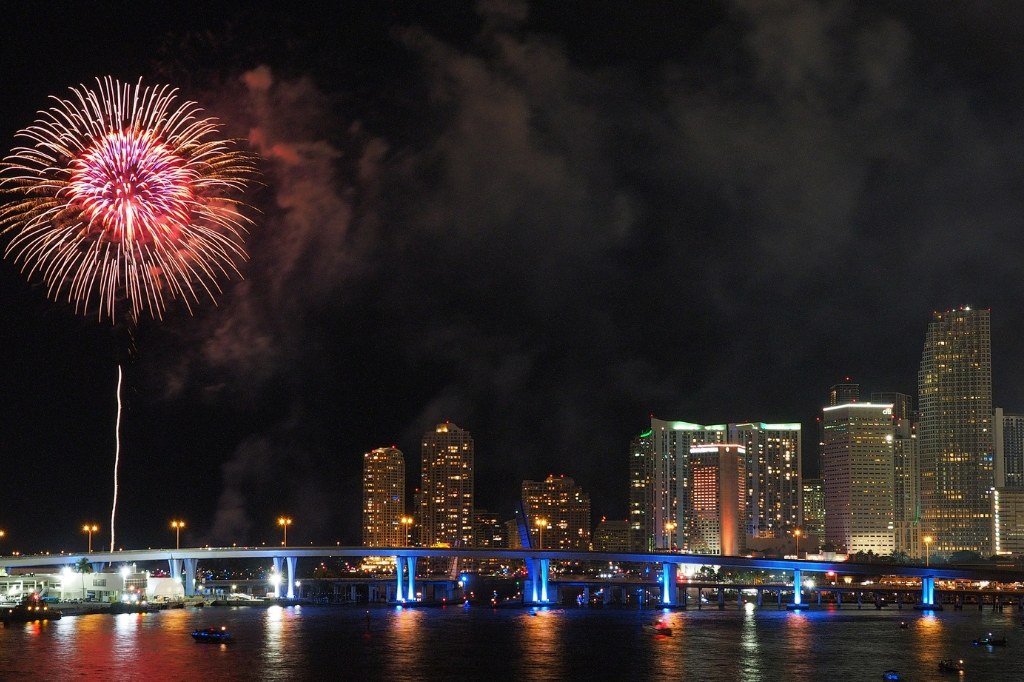
The fireworks over Biscayne Bay lasted twenty-two minutes. The country they celebrated has lasted two hundred and fifty years. Almost nothing else in American life has, and the short list of things that did is worth studying.

Fireworks over Biscayne Bay

Miami did not hold back. Tropical Park filled by early afternoon. The bayfront turned into one long picnic blanket from Margaret Pace Park to the Rickenbacker. Rooftops in Brickell sold out weeks in advance, restaurants ran their biggest weekend of the summer, and when the first shells went up over the water, a city that usually cannot agree on anything went quiet at the same time.

Two hundred and fifty years is a number that is easy to say and hard to actually hold. So here is a way to hold it. Miami, the city that threw this party, was incorporated in 1896. The country it was celebrating is one hundred and twenty years older than the city itself. Miami is younger than Coca-Cola.

That comparison opens a door worth walking through. Because if you go looking for American things that have survived anywhere near as long as America, the list gets short very fast, and the things on it start to rhyme.

The survivors

A flour company in Vermont has been selling the same essential product since 1790, when George Washington was in his first term. It is older than the White House.

Two years later, in 1792, twenty-four brokers signed an agreement under a buttonwood tree on Wall Street. That handshake became the New York Stock Exchange, which has now outlived every company it first listed.

Brooks Brothers started sewing in 1818 and dressed Lincoln. Levi Strauss turned tent canvas into workwear in 1853, and the product he landed on is in half the closets in Miami tonight. Jack Daniel registered his distillery in 1866. Coca-Cola poured its first glass in 1886, a decade before Miami existed. Harley-Davidson and Ford both lit their engines in 1903.

Out of the millions of American businesses started since 1776, the ones that lasted even half as long as the country can be counted without running out of breath. Longevity, it turns out, is the rarest product America makes.

What the old ones know

Look at that list long enough and the pattern shows itself. None of the survivors are still selling their original world. The flour company outlived wood stoves. The exchange outlived paper tickets. Levi's outlived the gold rush it was born serving. Ford outlived the Model T, the assembly line it invented, and every car it made for a century.

What none of them outlived is the thing they were actually about. The flour company is still about baking at home. The exchange is still about the deal. Levi's is still about work you can move in. Coca-Cola is still about a small, affordable moment of pleasure. Everything visible changed, constantly, sometimes desperately. The invisible thing at the center never did.

That is the whole trick, and it is the same trick the country itself has pulled for two hundred and fifty years. Survive by changing everything except what you are about.

The other ingredient is patience

There is a second pattern, less romantic and more useful. Almost every survivor spent decades being small. The flour company was a regional supplier for a century. Jack Daniel's was a county business for generations. These were not rocket ships. They were slow fires that nobody let go out, tended by people who assumed the work would outlive them and behaved accordingly.

That assumption changes decisions. You build differently when you believe someone will inherit what you are building. You pick partners differently, price differently, treat customers differently, and protect the name like it is the actual asset, because over a long enough timeline it is the only asset.

Miami's homework

Which brings this back to the city with the fireworks. Miami is one of the youngest major cities in America, and almost every business in it is first generation. The restaurants, the labels, the studios, the shops, nearly all of them are being run by the person who started them. There is no hundred-year-old Miami brand. Not one.

Somebody will build the first. Some business operating in this city right now, maybe a kitchen, maybe a clothing label, maybe something that does not have a category yet, will still be here at the city's own 250th. Statistically it will not be the loudest one, or the fastest-growing one. It will be the one that figured out early what it was about, and then refused to change that one thing while changing everything else.

The 250th is a good night for fireworks. It is a better morning for a question. What are you building that is meant to be handed down?

Special Edition. The Position publishes new stories every Wednesday and Friday. This one could not wait.

The Position · Culture

America Turns 250. Almost Nothing Else Does.

The fireworks over Biscayne Bay lasted twenty-two minutes. The country they celebrated has lasted two hundred and fifty years. Almost nothing else in American life has, and the short list of things that did is worth studying.

Fireworks over Biscayne Bay

Miami did not hold back. Tropical Park filled by early afternoon. The bayfront turned into one long picnic blanket from Margaret Pace Park to the Rickenbacker. Rooftops in Brickell sold out weeks in advance, restaurants ran their biggest weekend of the summer, and when the first shells went up over the water, a city that usually cannot agree on anything went quiet at the same time.

Two hundred and fifty years is a number that is easy to say and hard to actually hold. So here is a way to hold it. Miami, the city that threw this party, was incorporated in 1896. The country it was celebrating is one hundred and twenty years older than the city itself. Miami is younger than Coca-Cola.

That comparison opens a door worth walking through. Because if you go looking for American things that have survived anywhere near as long as America, the list gets short very fast, and the things on it start to rhyme.

The survivors

A flour company in Vermont has been selling the same essential product since 1790, when George Washington was in his first term. It is older than the White House.

Two years later, in 1792, twenty-four brokers signed an agreement under a buttonwood tree on Wall Street. That handshake became the New York Stock Exchange, which has now outlived every company it first listed.

Brooks Brothers started sewing in 1818 and dressed Lincoln. Levi Strauss turned tent canvas into workwear in 1853, and the product he landed on is in half the closets in Miami tonight. Jack Daniel registered his distillery in 1866. Coca-Cola poured its first glass in 1886, a decade before Miami existed. Harley-Davidson and Ford both lit their engines in 1903.

Out of the millions of American businesses started since 1776, the ones that lasted even half as long as the country can be counted without running out of breath. Longevity, it turns out, is the rarest product America makes.

What the old ones know

Look at that list long enough and the pattern shows itself. None of the survivors are still selling their original world. The flour company outlived wood stoves. The exchange outlived paper tickets. Levi's outlived the gold rush it was born serving. Ford outlived the Model T, the assembly line it invented, and every car it made for a century.

What none of them outlived is the thing they were actually about. The flour company is still about baking at home. The exchange is still about the deal. Levi's is still about work you can move in. Coca-Cola is still about a small, affordable moment of pleasure. Everything visible changed, constantly, sometimes desperately. The invisible thing at the center never did.

That is the whole trick, and it is the same trick the country itself has pulled for two hundred and fifty years. Survive by changing everything except what you are about.

The other ingredient is patience

There is a second pattern, less romantic and more useful. Almost every survivor spent decades being small. The flour company was a regional supplier for a century. Jack Daniel's was a county business for generations. These were not rocket ships. They were slow fires that nobody let go out, tended by people who assumed the work would outlive them and behaved accordingly.

That assumption changes decisions. You build differently when you believe someone will inherit what you are building. You pick partners differently, price differently, treat customers differently, and protect the name like it is the actual asset, because over a long enough timeline it is the only asset.

Miami's homework

Which brings this back to the city with the fireworks. Miami is one of the youngest major cities in America, and almost every business in it is first generation. The restaurants, the labels, the studios, the shops, nearly all of them are being run by the person who started them. There is no hundred-year-old Miami brand. Not one.

Somebody will build the first. Some business operating in this city right now, maybe a kitchen, maybe a clothing label, maybe something that does not have a category yet, will still be here at the city's own 250th. Statistically it will not be the loudest one, or the fastest-growing one. It will be the one that figured out early what it was about, and then refused to change that one thing while changing everything else.

The 250th is a good night for fireworks. It is a better morning for a question. What are you building that is meant to be handed down?

Special Edition. The Position publishes new stories every Wednesday and Friday. This one could not wait.
← All stories